Governance is often treated as a launch blocker bolted on late. Built as infrastructure from the start, it is what lets an organization deploy more AI systems, faster, with less risk.
AI Governance That Scales — Data, Models, and Oversight
Governance has a reputation problem in AI programs: it is seen as the committee that slows the launch. Built correctly, governance is not a brake — it is the infrastructure that lets an organization run ten AI systems in production instead of one, because the risk of each individual system is bounded and understood in advance rather than re-litigated every time.
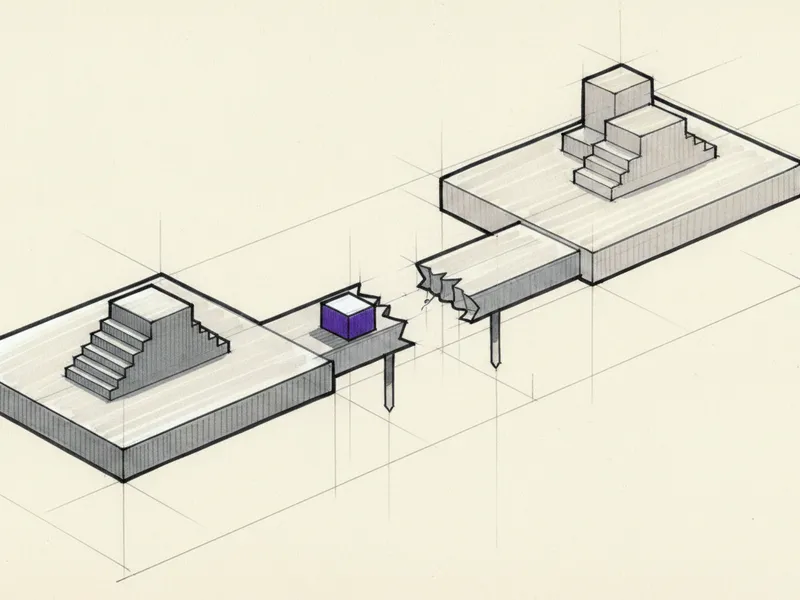
Governance Fails When It Is a Single Late Gate
The common failure mode is a review board that sees a system for the first time weeks before launch, with no visibility into the data it was trained on, no documented evaluation, and no owner once it ships. At that point, governance can only say yes or no — it cannot meaningfully improve the system, because every prior decision is already sunk. That single-gate model does not scale past the first few use cases; the backlog of pending reviews grows faster than the review capacity.
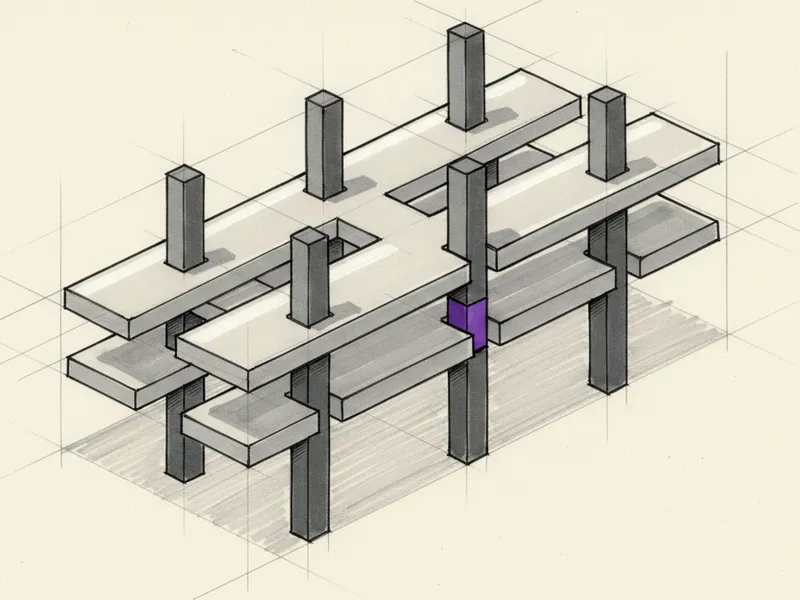
Three Layers That Scale Independently
Data Governance
Every AI system inherits the properties of its data — including the problems. Data governance means knowing, for each system, where the data came from, whether it contains personal or regulated information, whether it is representative of the population the system will actually serve, and who is accountable for its quality. This has to exist before model selection, not after — a governance review that starts at the model stage has already missed the point where most real risk enters.
Model Governance
This covers what the model does with the data: documented evaluation against defined success criteria, known failure modes and their severity, a change-management process for retraining or swapping models, and version tracking so that any output can be traced back to the model version that produced it. Model governance is where “it worked in testing” gets replaced with a specific, falsifiable claim about performance boundaries.
Oversight Governance
This is the ongoing layer: monitoring for drift, a defined escalation path when the model behaves unexpectedly, human-in-the-loop checkpoints sized to the actual risk of the decision, and a kill switch that someone is authorized to use without waiting for a committee. Oversight is the layer most often missing entirely, because it has no natural launch-day deadline forcing it into existence.
Making Governance Scale, Not Stall
The organizations that run many AI systems safely share a pattern: they classify use cases by risk tier at intake, and route each tier through a proportionate process. A low-risk internal drafting tool does not need the same review cycle as a system making credit decisions. Tiering turns governance from a uniform bottleneck into a targeted control — most systems clear a lightweight path quickly, and review capacity concentrates on the systems that actually carry material risk.
Governance as a Capability, Not a Checkpoint
Treated as infrastructure — built once, applied consistently, revisited as risk tiers are learned — governance becomes something the organization owns and improves over time, the same way it owns its security posture or its financial controls. Treated as a gate, it remains a one-off obstacle that has to be fought through again for every new system. The difference in outcome is not the rigor of any single review; it is whether the organization is building governance capability or repeating governance effort.